
All Posts By

admin-pro

“Yes, If” Is Welcome Here, and “No, Because” Is Not

By ArticlesNo Comments

In my career, I’ve learned that framing our responses to challenges and opportunities can significantly influence our team’s culture and overall success. One of the most impactful shifts I’ve experienced is adopting a “Yes, if” mindset over a “No, because” approach.

This seemingly small change can foster a culture of possibility, innovation, and problem-solving. I want to share my experiences and insights with you, as I believe this shift can be transformative for your career and organization as well.

Embracing the “Yes, If” Mindset

When we encounter new ideas or projects, it’s natural to immediately see the obstacles and reasons why something might not work. However, starting with “No, because” shuts down creativity and discourages initiative. It creates an environment where employees may hesitate to bring forth innovative ideas, fearing they’ll be dismissed outright.

Instead, I encourage a “Yes, if” approach. This mindset shifts the conversation from what can’t be done to what can be achieved, given certain conditions. It invites collaboration and problem-solving, turning potential roadblocks into challenges to overcome together.

For example, when my team proposed integrating a new telehealth platform during the early days of the pandemic, initial reactions could have focused on the barriers: lack of existing infrastructure, budget constraints, or potential resistance from staff. Instead, by framing the discussion with “Yes, if,” we explored what would be necessary to make it work:

  • Yes, ifwe secure the necessary funding.
  • Yes, ifwe provide adequate training for our staff.
  • Yes, ifwe ensure the platform meets all regulatory requirements.

This approach transformed a potentially dismissive conversation into a constructive planning session. As a result, we successfully implemented the platform, significantly enhancing our healthcare delivery capabilities during a critical time.

Recommended by LinkedIn


The Power of Positive Framing

Positive framing through “Yes, if” does more than just keep the conversation going. It empowers team members to think critically and creatively about solutions. It fosters an inclusive environment where everyone feels their ideas are valued and considered.

Moreover, this mindset encourages personal and professional growth. Team members learn to anticipate challenges and think proactively about solutions, a skill that is invaluable in any field. It builds resilience, as the focus shifts from what’s not possible to how we can make things possible.

Practical Steps to Implement “Yes, If”

Here are some practical steps to integrate the “Yes, if” approach into your daily interactions:

  1. Encourage Open Dialogue: Create a safe space where team members feel comfortable sharing their ideas without fear of immediate rejection. Emphasize that all suggestions are worth exploring.
  2. Focus on Solutions: When faced with a proposal, consciously steer the discussion towards what would be needed to make it work rather than why it might fail.
  3. Foster a Collaborative Culture: Involve various stakeholders in the brainstorming process to leverage diverse perspectives and expertise. This not only enriches the conversation but also builds a sense of ownership and commitment to the outcome.
  4. Provide Resources and Support: Ensure your team has the necessary resources and support to explore and implement their ideas. This might include training, budget allocations, or time for research and development.
  5. Celebrate Successes: Recognize and celebrate when a “Yes, if” approach leads to successful outcomes. This reinforces the value of positive framing and encourages continued innovation.

Conclusion

Adopting a “Yes, if” mindset has been a game-changer in my role at Santa Clara County. It has not only driven innovation and improved problem-solving but also created a more positive and empowering work environment. I encourage you to try this approach in your own career. Embrace possibilities, focus on solutions, and watch as your team transforms challenges into opportunities.

Remember, “Yes, if” is welcome here, and “No, because” is not. This simple shift can make all the difference in driving your organization towards greater success.
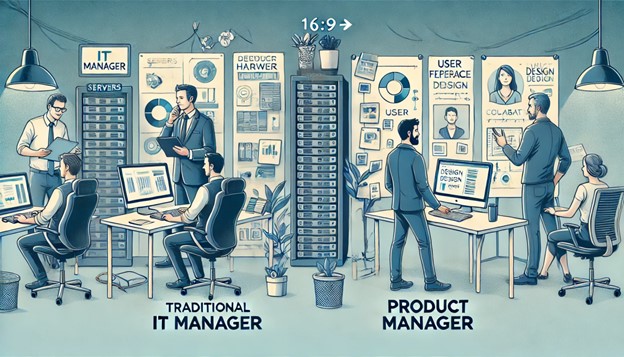

 

Lead Like a Product Manager, Not an IT Manager

By ArticlesNo Comments

The distinction between traditional IT management and product management is increasingly significant in today’s rapidly evolving technological landscape. While IT managers focus on maintaining and supporting existing systems, product managers drive innovation, user-centric design, and value creation. Leading like a product manager, rather than an IT manager, can catalyze organizational transformation, driving efficiency, agility, and a stronger alignment with business goals.

The Traditional IT Manager Mindset

Traditional IT management is often characterized by a focus on system stability, risk mitigation, and cost control. IT managers ensure that the technological infrastructure is reliable, secure, and efficient. Their success is measured by uptime, incident resolution times, and budget adherence. While these are critical functions, they can sometimes lead to a reactive approach, where the primary goal is to “keep the lights on.”

The Product Manager Mindset

In contrast, product management is inherently proactive and user-focused. Product managers are responsible for the lifecycle of a product, from ideation and development to market launch and beyond. Their success is measured by user satisfaction, market adoption, and value creation. This mindset involves understanding user needs, market trends, and competitive landscapes to create products that not only meet but exceed customer expectations.

Key Differences in Leadership Approach

  1. User-Centric Focus vs. System-Centric FocusIT Managers: Primarily focus on the internal workings of IT systems, ensuring they run smoothly and efficiently. Product Managers: Prioritize the end-user experience, continuously gathering feedback to refine and improve the product.
  2. Innovation vs. MaintenanceIT Managers: Concentrate on maintaining and optimizing existing systems, often within the constraints of established processes and technologies. Product Managers: Embrace innovation, seeking new opportunities to create value through cutting-edge technologies and creative problem-solving.
  3. Cross-Functional Collaboration vs. Siloed OperationsIT Managers: Typically work within IT departments, often in silos that separate them from other business functions. Product Managers: Operate at the intersection of various departments, including marketing, sales, and customer service, fostering cross-functional collaboration to drive product success.
  4. Agility and Adaptability vs. Stability and ControlIT Managers: Aim for stability and control, minimizing disruptions and maintaining steady operations. Product Managers: Thrive on agility and adaptability, quickly responding to market changes and evolving user needs.


Strategic Benefits for Senior Executives

  1. Enhanced Competitive Advantage: By adopting a product management approach, organizations can stay ahead of market trends and rapidly respond to changing customer demands, ensuring a competitive edge.
  2. Increased Innovation and Growth: A product management mindset encourages continuous innovation, driving the development of new features and functionalities that can open up new revenue streams and growth opportunities.
  3. Better Alignment with Strategic Goals: Product managers inherently align their strategies with business objectives, ensuring that technological initiatives directly contribute to the organization’s overall success and long-term vision.
  4. Optimized Resource Allocation: Emphasizing user needs and market demands allows for more strategic allocation of resources, focusing investments on initiatives that deliver the highest value and return on investment (ROI).

Research Insights

Research supports the shift from traditional IT management to a product management approach. A study by Gartner highlights that organizations with a product-centric approach to IT are more likely to achieve digital transformation success. They are better positioned to respond to market demands, innovate continuously, and deliver superior user experiences.

Moreover, a McKinsey report emphasizes that product managers are essential for driving digital transformation. Their ability to understand and anticipate customer needs, coupled with a focus on delivering value, makes them critical players in navigating the complexities of the digital era.

Implementing the Shift

  1. Cultivate a Product Mindset: Encourage IT leaders to think like product managers, focusing on user needs and value creation rather than just system performance.
  2. Foster Cross-Functional Teams: Break down silos and promote collaboration across departments to ensure that IT initiatives are aligned with broader business goals.
  3. Embrace Agile Methodologies: Implement agile practices to enhance flexibility and responsiveness, allowing teams to quickly adapt to changes and iterate on solutions.
  4. Invest in Continuous Learning: Provide training and development opportunities for IT leaders to acquire product management skills, such as user research, market analysis, and innovation management.

Leading like a product manager, rather than an IT manager, represents a paradigm shift in how organizations approach technology and innovation. By prioritizing user-centric design, fostering cross-functional collaboration, and embracing agility, leaders can drive greater value and ensure their organizations remain competitive in an ever-evolving digital landscape. This transformation requires a commitment to continuous learning and a willingness to challenge traditional mindsets, but the rewards are well worth the effort. Senior executives who champion this shift will not only enhance their organizations’ technological capabilities but also drive strategic growth and long-term success.

Key Metrics to Track the Success of Digital Transformation in Healthcare

By ArticlesNo Comments

The healthcare industry’s digital transformation is vital in improving patient care, streamlining operations, and ensuring data-driven decisions. Here are key metrics that healthcare organizations should track to measure the success of their digital transformation efforts.

  1. Patient Experience Metrics
  • Net Promoter Score (NPS): This metric assesses patient loyalty and satisfaction, which are crucial in healthcare. Mayo Clinic, for example, utilizes patient feedback captured through digital channels to maintain a high NPS, indicating strong patient approval and loyalty.
  • Patient Satisfaction Score (CSAT): CSAT in healthcare can provide insights into patients’ satisfaction with clinical services and digital interactions. Cleveland Clinic has leveraged digital tools like patient portals and telehealth services to enhance patient satisfaction, reflected in their CSAT scores.
  • Patient Effort Score (CES): This measures how much effort patients need to exert to get their issues resolved. Kaiser Permanente has implemented an integrated online system that simplifies appointment scheduling and medication refills, thus reducing patient effort.
  1. Operational Efficiency Metrics
  • Time to Treatment: The speed with which patients receive care after arriving at a facility is a critical measure. Digital tools that manage patient flow and automate admission processes can significantly reduce this time, as seen in systems like those employed by Johns Hopkins Hospital.
  • Admission and Discharge Efficiency: Digital systems can streamline these critical processes, reducing bottlenecks. Massachusetts General Hospital uses digital records and patient management systems to enhance these efficiencies, reducing wait times and administrative overhead.
  • Automation Rate: The percentage of administrative and clinical processes that are automated. For example, Geisinger Health System uses robotic process automation to handle routine tasks, freeing up staff for patient care.
  1. Financial Metrics
  • Return on Investment (ROI): Digital transformations in healthcare can be costly, and tracking ROI helps justify these expenses. Telehealth implementations, as carried out by the Cleveland Clinic, have shown significant ROI by reducing the need for in-person visits and optimizing resource allocation.
  • Cost Savings: Digital records systems reduce the need for physical storage and streamline staff workflows, thereby saving costs. The Veterans Health Administration has achieved substantial cost savings by implementing comprehensive digital health records.
  • Revenue Growth from Digital Channels: With the increase in telemedicine, tracking revenue from digital services becomes essential. UCSF Health reports growth in revenue from its telehealth services, which have expanded patient reach and improved service delivery.
  1. Clinical Outcomes Metrics
  • Patient Readmission Rates: Digital tools can help in monitoring patients post-discharge and reducing readmission rates. Mount Sinai Health System uses remote patient monitoring to achieve this, directly impacting this metric.
  • Health Outcome Improvements: Tracking improvements in health outcomes related to digital interventions, such as through digital therapeutic applications. For instance, digital diabetes management programs have shown improvement in patient glycemic control metrics.
  • Treatment Adherence Rates: Digital prescription tools and mobile apps can improve treatment adherence, critical for chronic disease management. Apps like MyTherapy remind patients to take their medications, thereby improving adherence rates.
  1. Technology Adoption and Utilization Metrics
  • System Usage and Adoption Rates: Measures how widely and effectively healthcare technologies are being used, such as electronic health records (EHRs). The widespread adoption of EHRs in large networks like Kaiser Permanente demonstrates success in this area.
  • Data Utilization: Effective use of collected health data for predictive analytics and personalized medicine. Partners Healthcare utilizes big data to predict patient outcomes and tailor treatments, showcasing effective data utilization.
  • Innovation Rate: The frequency of new digital solutions being implemented. For example, the use of AI in radiology at Stanford Health Care represents a high rate of technological innovation.
  1. Security and Compliance Metrics
  • Cybersecurity Incidents: Given the sensitive nature of health data, tracking security breaches is critical. Reduced incidents over time indicate effective cybersecurity measures.
  • Compliance Rates: Healthcare is heavily regulated, and digital solutions must comply with laws like HIPAA in the U.S. Tracking compliance rates helps healthcare institutions gauge their adherence to these standards.

Conclusion

For healthcare organizations, tracking these metrics provides a clear view of how digital transformation impacts patient care, operational efficiency, and financial health. As digital technologies advance, these metrics will continue to evolve, helping the healthcare sector adapt and thrive in an increasingly digital world.

To Infinity & Beyond – Episode #5: Networking and Relationships

By ArticlesNo Comments

The Role of Networking in Career Growth

Networking is not just about collecting contacts; it’s about building a web of relationships that can propel both personal and professional growth. The right connections can open doors to new opportunities, offer insights and advice, and provide support in times of challenge.

Consider the story of Emma, a young software developer eager to make her mark in the tech industry. Emma understood early on that technical skills alone wouldn’t be enough to advance her career to the level she aspired to. She began attending tech meetups, participating in hackathons, and connecting with industry leaders on LinkedIn. One of these connections led to a recommendation for a position at a leading tech firm—a role that wasn’t advertised publicly. Emma’s proactive approach to networking didn’t just land her a job; it launched her career.

Building and Maintaining Professional Relationships

“Building professional relationships is an art that requires sincerity, effort, and a strategy. It’s about forming connections that are mutually beneficial and enduring. The key to successful professional relationships is consistency and genuine interaction.

Let’s look at the case of Tom, a sales executive who excelled in maintaining relationships. He made it a point to keep in touch with clients and colleagues through regular updates, congratulatory messages on professional achievements, and occasional coffee meetings. These efforts kept his network active and engaged. When Tom decided to start his own business, it was these well-maintained connections that became his first clients and strongest advocates.

Effective relationship-building involves regular communication, sharing useful information, offering help without immediate expectations, and most importantly, keeping your commitments.

Leveraging Social Media and Professional Platforms

“In today’s digital age, platforms like LinkedIn, Twitter, and industry-specific online forums are powerful tools for networking. They allow you to reach out to industry leaders, join professional groups, and share your expertise with a global audience.

Case in point: Julia, a freelance graphic designer, leveraged social media to showcase her work and connect with potential clients. She regularly posted her latest designs on Instagram and engaged with followers by responding to comments and sharing design tips. This not only increased her visibility but also established her reputation as a knowledgeable and approachable professional. Her efforts paid off when she was contacted by a major brand through LinkedIn for a significant project.

Moreover, social media platforms are invaluable for staying informed about industry trends, upcoming networking events, and potential job opportunities. Engaging actively and thoughtfully on these platforms can significantly enhance your professional profile and open up new avenues for career growth.

Conclusion

Networking and building relationships are fundamental to career success. As we’ve seen from Emma, Tom, and Julia, investing time and energy in nurturing professional connections can yield substantial rewards. It’s about more than just exchanging business cards—it’s about creating lasting, supportive bonds that benefit all parties involved. Remember, in the realm of career growth, your network is your net worth.

As we move forward, keep these stories and strategies in mind. Start by evaluating your current networking strategies, identify areas for improvement, and commit to taking proactive steps to expand and deepen your professional relationships.

To Infinity & Beyond – Episode #6: Navigating Career Challenges

By ArticlesNo Comments

Overcoming Common Career Obstacles

Every career path, no matter how carefully planned, encounters obstacles. These challenges, whether they are unexpected layoffs, skill gaps, or difficult work environments, test our resilience and adaptability. The key to navigating these obstacles is not just to overcome them, but to learn and grow from them.

Consider the story of Michael, an experienced project manager who faced a sudden layoff due to company downsizing. Instead of seeing this setback as a career-ending disaster, Michael viewed it as an opportunity to pivot. He used the time off to enhance his digital skills and shifted his career focus toward the burgeoning field of remote project management. This shift not only led him back into employment quicker but into a sector that was more future-proof, demonstrating that sometimes, obstacles can steer us towards new pathways.

Strategies for Resilience and Adaptability

Resilience in the workplace is about bouncing back from setbacks and adapting to changes. It involves developing a mindset that views failures and challenges as temporary and instructive, rather than permanent and insurmountable.

Take Sarah, for example, who was passed over for a promotion she had worked tirelessly towards. Instead of letting disappointment derail her progress, she requested feedback on her performance, which revealed areas for improvement she hadn’t considered. Sarah used this feedback constructively to develop her leadership skills and better prepare herself for future opportunities.

Adaptability is equally crucial and can be cultivated by staying open to new experiences and continuous learning. Being adaptable not only helps you handle the challenges you currently face but also prepares you for future uncertainties.

Learning from Failures and Setbacks

Failures and setbacks, while often painful, are rich with lessons. Embracing these experiences as opportunities for learning and growth is a powerful strategy for career development.

Consider Alex, a tech startup founder whose first venture failed spectacularly. Rather than retreating from the entrepreneurial scene, Alex conducted a thorough analysis of the failure. He recognized that poor financial management and a lack of market research were the primary causes. Armed with this knowledge, he approached his second venture with a more calculated strategy, focusing on robust market analysis and financial planning. His second venture was a success, proving that the lessons learned from failure can pave the way for future success.

Conclusion

Navigating career challenges requires resilience, adaptability, and the willingness to learn from failures. By adopting a mindset that views each obstacle as a stepping stone rather than a stumbling block, you can use challenges to propel your career forward rather than hold it back. As you move through your career journey, remember the stories of Michael, Sarah, and Alex. Their experiences illustrate that while the path may not always be smooth, the obstacles along the way are what refine and define your professional journey.

To Infinity & Beyond – Episode #7: Achieving Work-Life Balance

By ArticlesNo Comments

Understanding the Importance of Balance

“In the relentless pursuit of career success, it’s easy to overlook the importance of work-life balance. Yet, maintaining an equilibrium between professional demands and personal life is crucial for long-term happiness and effectiveness at work. This balance prevents burnout, preserves health, and enhances overall life satisfaction.

Reflect on the journey of Lisa, a dedicated attorney known for her grueling work hours. Her career thrived, but her personal life suffered, leading to stress and health issues. It was only after facing a serious health scare that Lisa realized the true cost of her unbalanced lifestyle. She learned that true professional success doesn’t come at the expense of personal well-being but from harmonizing the two.”

Techniques for Maintaining Health and Well-Being

Maintaining your health and well-being is a fundamental aspect of achieving work-life balance. It involves more than just avoiding illness; it’s about fostering an environment that allows you to thrive both at work and at home.

  1. Regular Exercise:Incorporate physical activity into your routine. This can be as simple as a daily walk, yoga, or more structured fitness training. Exercise not only improves physical health but also reduces stress.
  2. Mindfulness and Meditation:These practices help manage stress, improve focus, and maintain mental health. Even a few minutes a day can make a significant difference.
  3. Adequate Rest:Prioritize getting enough sleep. Sleep deprivation can severely impact your productivity and cognitive functions.
  4. Nutrition:Eat a balanced diet that fuels your body for the demands of your day. Good nutrition supports energy levels and overall health.
  5. Hobbies and Social Activities:Engage in activities outside of work that you enjoy. Spending time on hobbies and with loved ones can rejuvenate your mind and spirit.

For instance, consider the routine adopted by Eric, a software developer, who schedules ‘tech-free’ times during his evenings and weekends to pursue photography and spend quality time with his family. These breaks greatly enhance his creativity and productivity at work.

Balancing Career Ambitions with Personal Life

Finding harmony between career aspirations and personal life involves setting boundaries and being mindful of your commitments. This balance is not about allocating an equal number of hours to each; it’s about making the time spent on each count.

James, a senior marketing director, once struggled with this balance. His turning point came when he began actively scheduling personal activities into his calendar, just like work meetings. He made it a rule to leave the office by 6 PM to dine with his family and designated Saturdays for outings or personal projects. This not only improved his relationships and personal satisfaction but also made him more focused and productive during work hours.

Another effective strategy is to periodically reassess your priorities. Life changes, and so will your balancing act. Regular check-ins with yourself about what is truly important can help you adjust your commitments and ensure that both your career and personal life are getting the attention they deserve.

Conclusion

Achieving work-life balance is not a one-time task but an ongoing process of adjustment and engagement with both your personal and professional worlds. Remember, a well-balanced life enhances your performance, health, and overall satisfaction. As you work through your challenges, keep in mind the examples of Lisa, Eric, and James. Their stories highlight that while the journey to balance is personal and unique, the benefits of achieving it are universal.

To Infinity & Beyond – Episode #8: Future Trends and Preparedness

By ArticlesNo Comments

Anticipating Future Career Trends

In a world where change is the only constant, being proactive about understanding and anticipating future career trends is not just advantageous—it’s imperative. The ability to foresee shifts in industry dynamics, emerging job roles, and evolving skill demands can set you apart in your career journey.

Consider the transformative impact of artificial intelligence across sectors. Those who recognized its potential early on and began cultivating relevant skills positioned themselves as invaluable assets in their respective fields. Take Melissa, a data analyst who noticed the increasing reliance on AI for data interpretation and predictive analytics. By proactively upskilling in machine learning and AI applications, she not only secured her position but also became a key player in her company’s transition towards data-driven decision-making.

To anticipate trends effectively:

  1. Stay Informed:Regularly follow industry news, reports, and influential thought leaders.
  2. Engage with Professionals:Join forums and networks that discuss future predictions and innovations.
  3. Continuous Learning:Enroll in courses that cover emerging technologies and methodologies in your field.

Adapting to Changing Job Markets and Technologies

Adaptability in the face of changing job markets and technologies is crucial for career longevity and success. This means not only keeping your skills relevant but also being flexible in your career plans and expectations.

For instance, consider the rapid shift to remote work in recent years. Adrian, a project manager, saw this not as a hurdle but as an opportunity to enhance his virtual team management skills. By embracing online collaboration tools and virtual leadership techniques, he improved his team’s productivity and his own marketability.

Strategies for adaptation include:

  1. Skill Diversification:Develop a broad base of skills with special attention to digital literacy, no matter your field.
  2. Emotional Intelligence:Cultivate skills like resilience, communication, and empathy, which are crucial in navigating workplace changes.
  3. Risk Taking:Be open to new roles or projects, even those outside your comfort zone, which can lead to unexpected opportunities.

Staying Ahead in a Dynamic Work Environment

To stay ahead in a dynamic work environment, one must not only react to changes but also actively engage in shaping one’s career trajectory. This proactive approach involves continuous improvement, innovation, and a forward-thinking mindset.

James, an IT consultant, regularly dedicates time to innovation and process improvement initiatives within his team. His proactive approach not only enhances efficiency but also establishes him as a forward-thinker and a go-to problem solver in his organization.

To stay ahead, consider the following tactics:

  1. Innovation:Regularly propose new ideas or improvements at work. This shows initiative and positions you as a thought leader.
  2. Feedback and Reflection:Actively seek feedback and use it to refine your strategies and approaches.
  3. Networking:Maintain a strong professional network to gain insights and opportunities that can keep you ahead of industry curves.

Conclusion

The landscape of work is continually evolving, shaped by technological advancements, societal shifts, and economic changes. By anticipating future trends, adapting to new realities, and striving to stay ahead, you equip yourself not just to survive but to thrive in this dynamic environment. Remember, the future belongs to those who are prepared. Let the stories of Melissa, Adrian, and James inspire you to take charge of your career with a proactive, strategic approach to future trends and preparedness.

A Guide to Effective Leadership

By ArticlesNo Comments

In today’s diverse workplaces, leaders face a unique challenge to manage teams composed of individuals from different generations. The interactions between people of different age groups play a crucial role in shaping team culture and productivity, it plays a crucial role in maintaining a good environment at the office. Effective leadership in such environments requires understanding, empathy, and adaptability.

Firstly, leaders must recognize the unique qualities and perspectives that each generation brings to the table. There are five generations known as Baby Boomers, Generation X, millennials, and Generation Z all have distinct values, communication styles, perspectives, and work preferences. By acknowledging and respecting these differences, leaders can foster a culture of inclusivity and mutual respect.

Empathy is another essential trait for navigating intergenerational dynamics. Leaders must put themselves in the shoes of their team members, understanding their motivations, challenges, and aspirations. This empathy enables leaders to tailor their approach to communication, feedback, and conflict resolution, effectively bridging the generation gap.

Adaptability is key in today’s rapidly changing world. Leaders must be willing to embrace new technologies, work methodologies, and ways of thinking, regardless of their own generational background. By remaining flexible and open-minded, leaders can create an environment where innovation thrives and individuals of all ages feel valued and empowered. This will also help with the productivity of the organization.

In conclusion, effective leadership in intergenerational settings requires a combination of understanding, empathy, and adaptability. By recognizing the unique qualities of each generation, empathizing with team members, and remaining adaptable to change, leaders can foster a collaborative and inclusive work environment where everyone can thrive. So, let’s embrace the diversity of our teams and lead with compassion and flexibility to drive success in the age of intergenerational dynamics for a better understanding of this amazing concept of leadership in an intergenerational setting you should read “The Age of Inclusion” by Khalid Turk. You can get your copies from Amazon.
Here is a sneak peek of what our readers have to say about the book “The Age of Inclusion” by Khalid Turk;